Case Of The Month | June 2026

Case of the Month
June 23, 2026

The Case

The Case

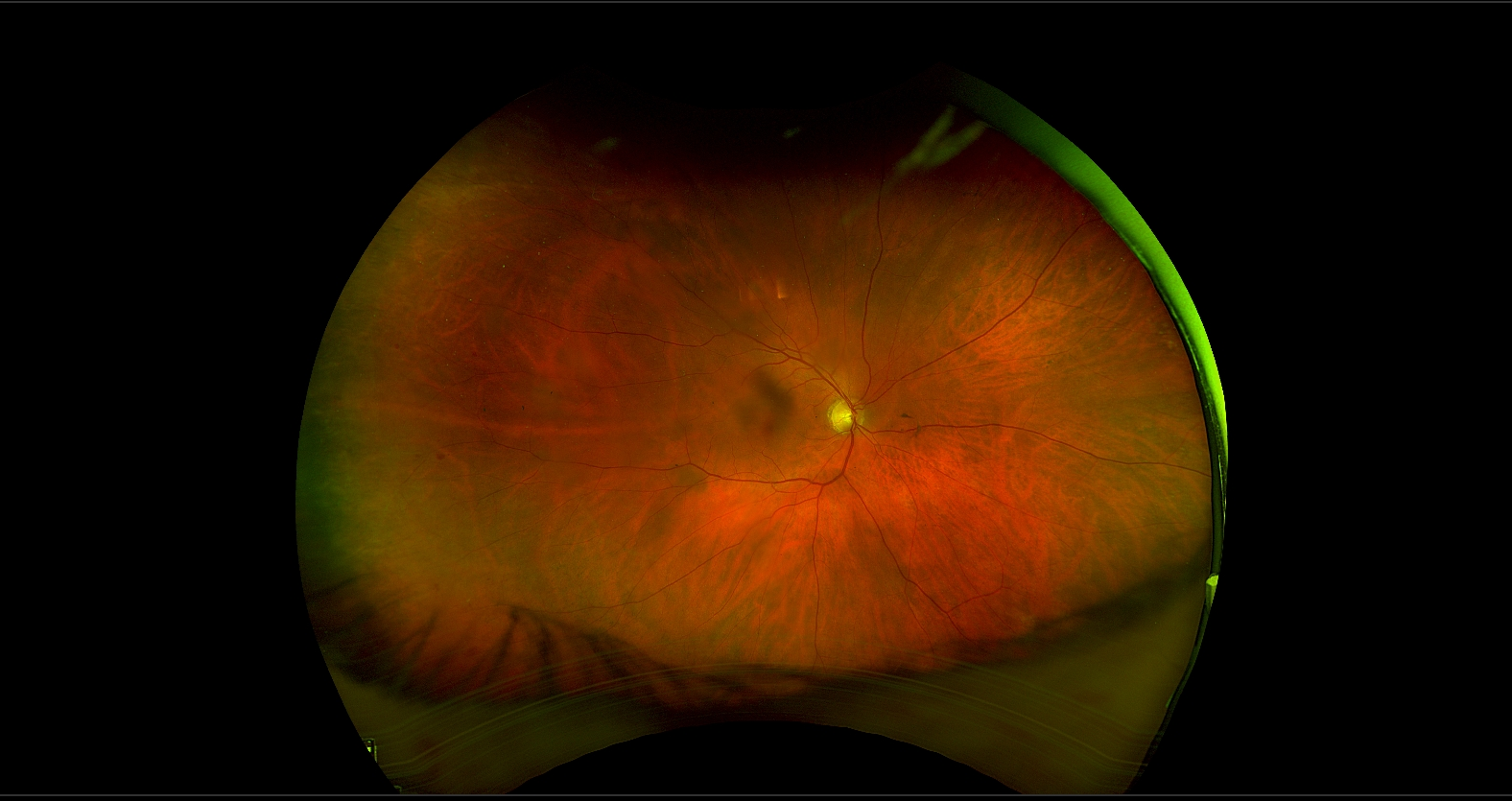
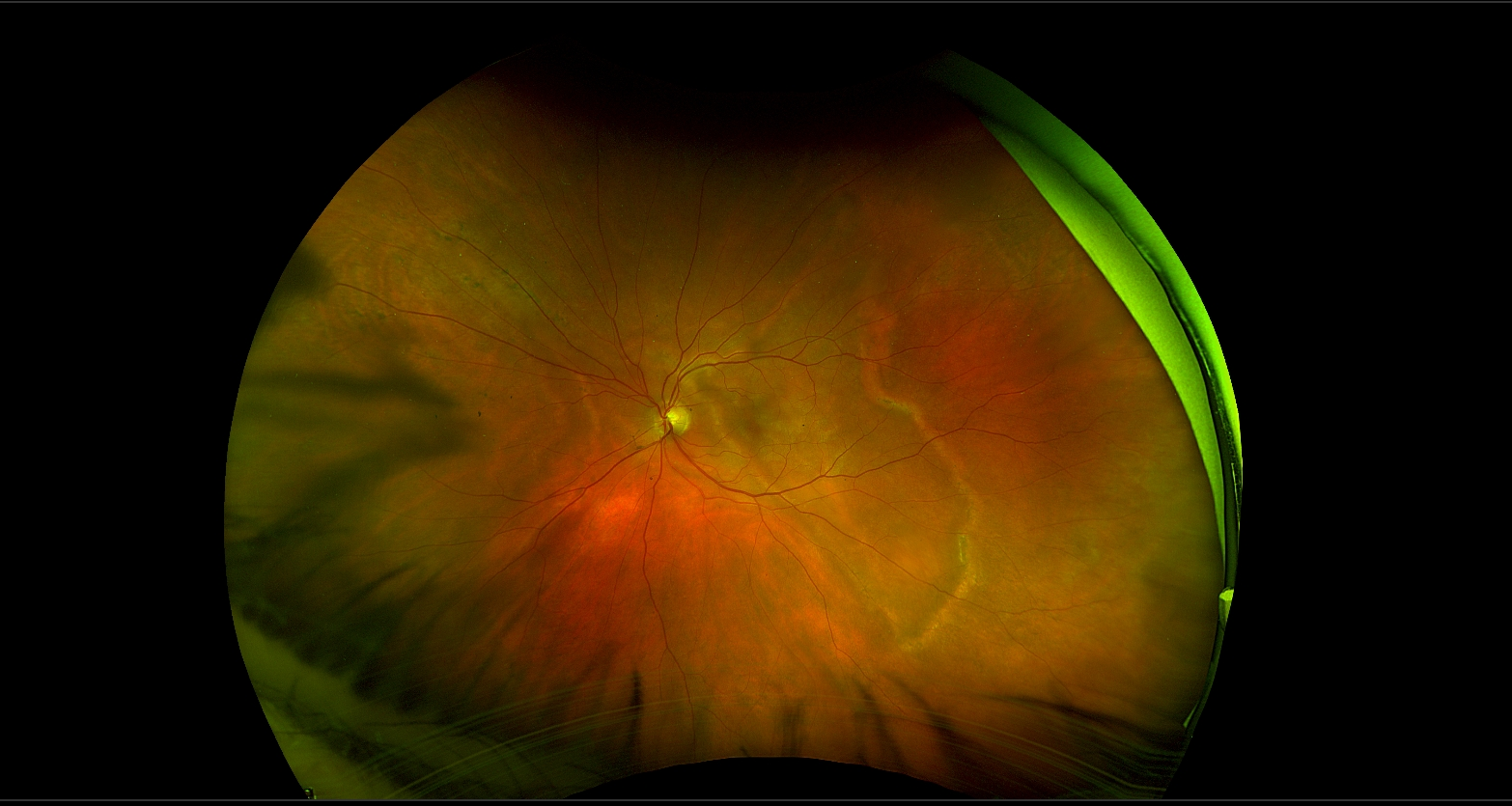
The patient was an 82-year-old man who reported an intermittent "black blob" temporal to fixation in the left eye for approximately one month. Visual acuity was 20/40 (J2) OD and 20/40 (J3) OS. Anterior segment examination revealed 2+ nuclear sclerosis in both eyes. Fundus findings and multimodal imaging are shown in the accompanying figures. The apparent dark area over the macula in the right eye is an imaging artifact.


What is the most likely diagnosis?


Nevus

Nematode

Atypical choroidal neovascular membrane

Choroidal macrovessel

Answer

Choroidal macrovessel

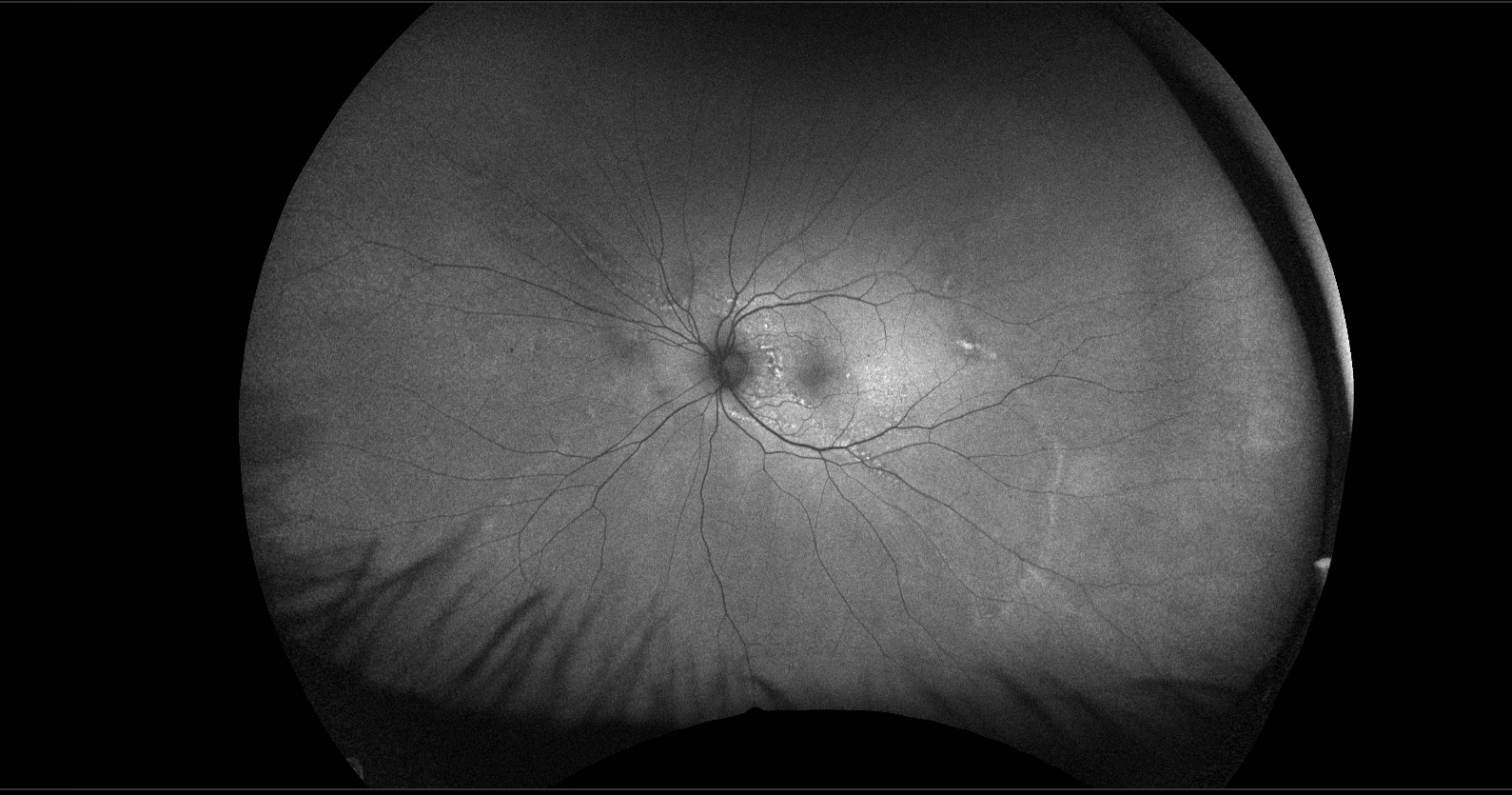
Imaging studies of the right eye are unremarkable. The fundus photograph of the left eye demonstrates a large, irregular, temporal linear loop of hypopigmentation with focal areas of hyperpigmentation. Fundus autofluorescence reveals linear and punctate hyperautofluorescence along portions of the loop, as well as two subtle linear hyperautofluorescent lesions nasal to the disc, indicating retinal pigment epithelium (RPE) stress.

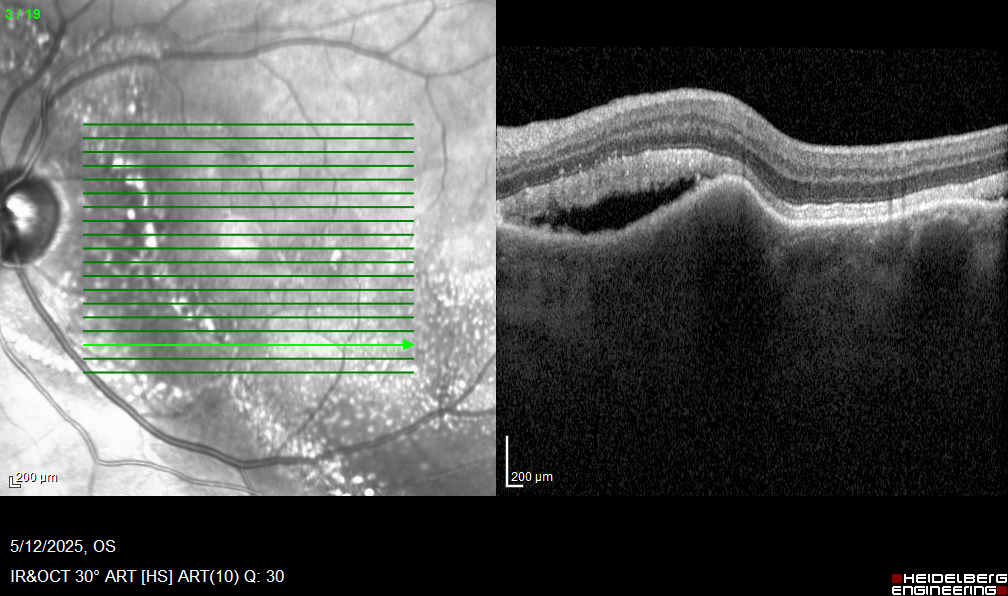
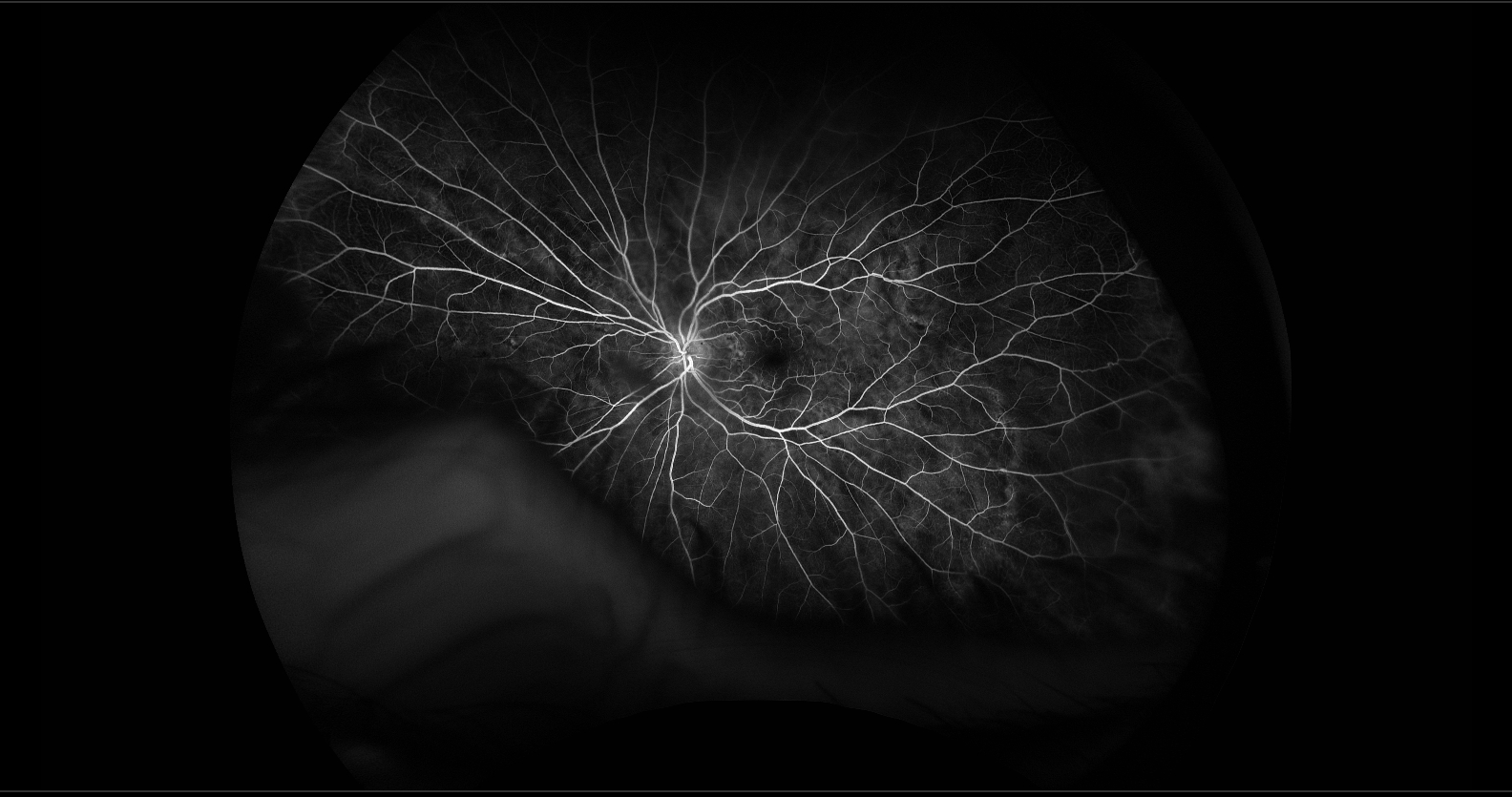
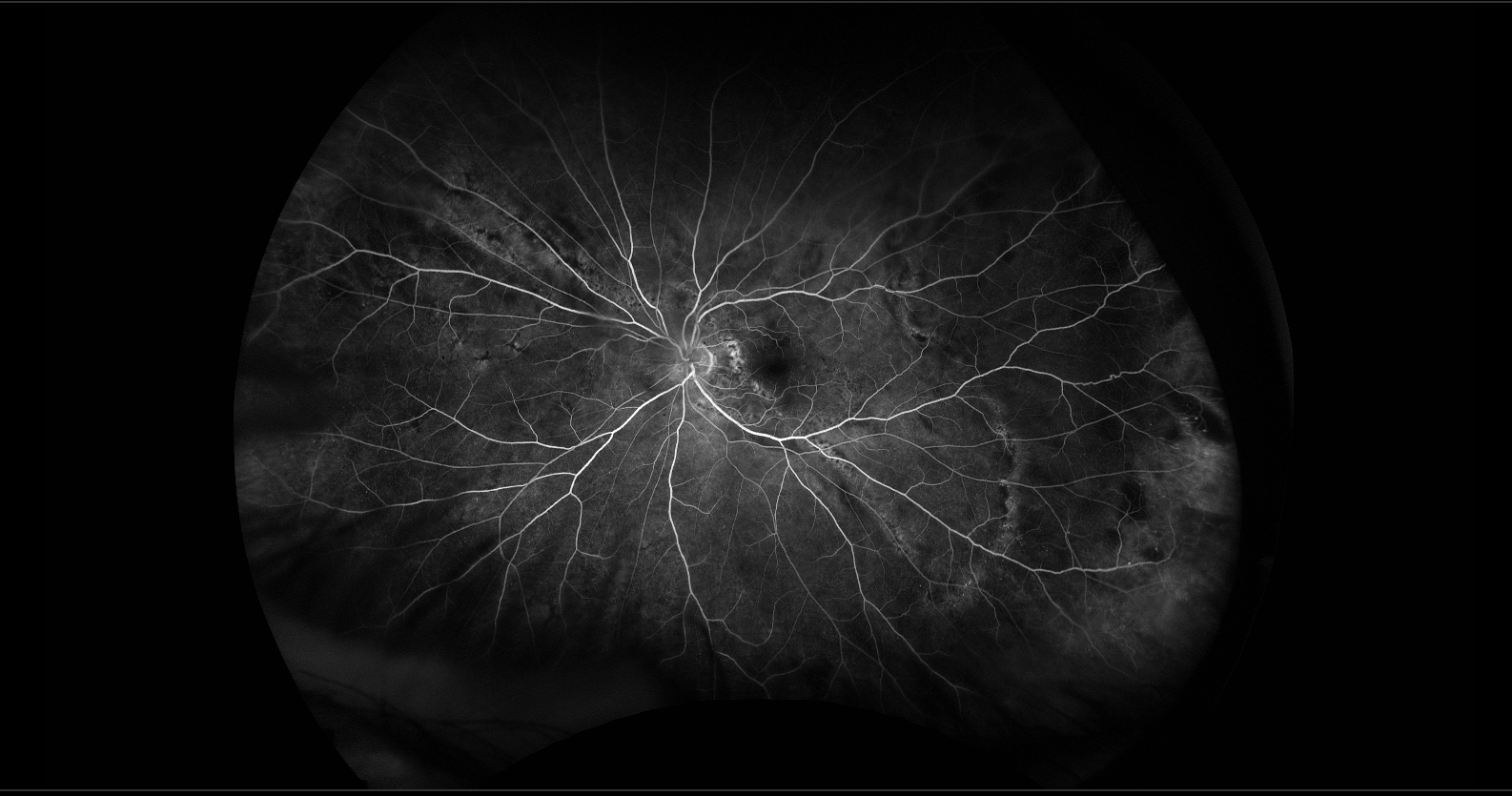
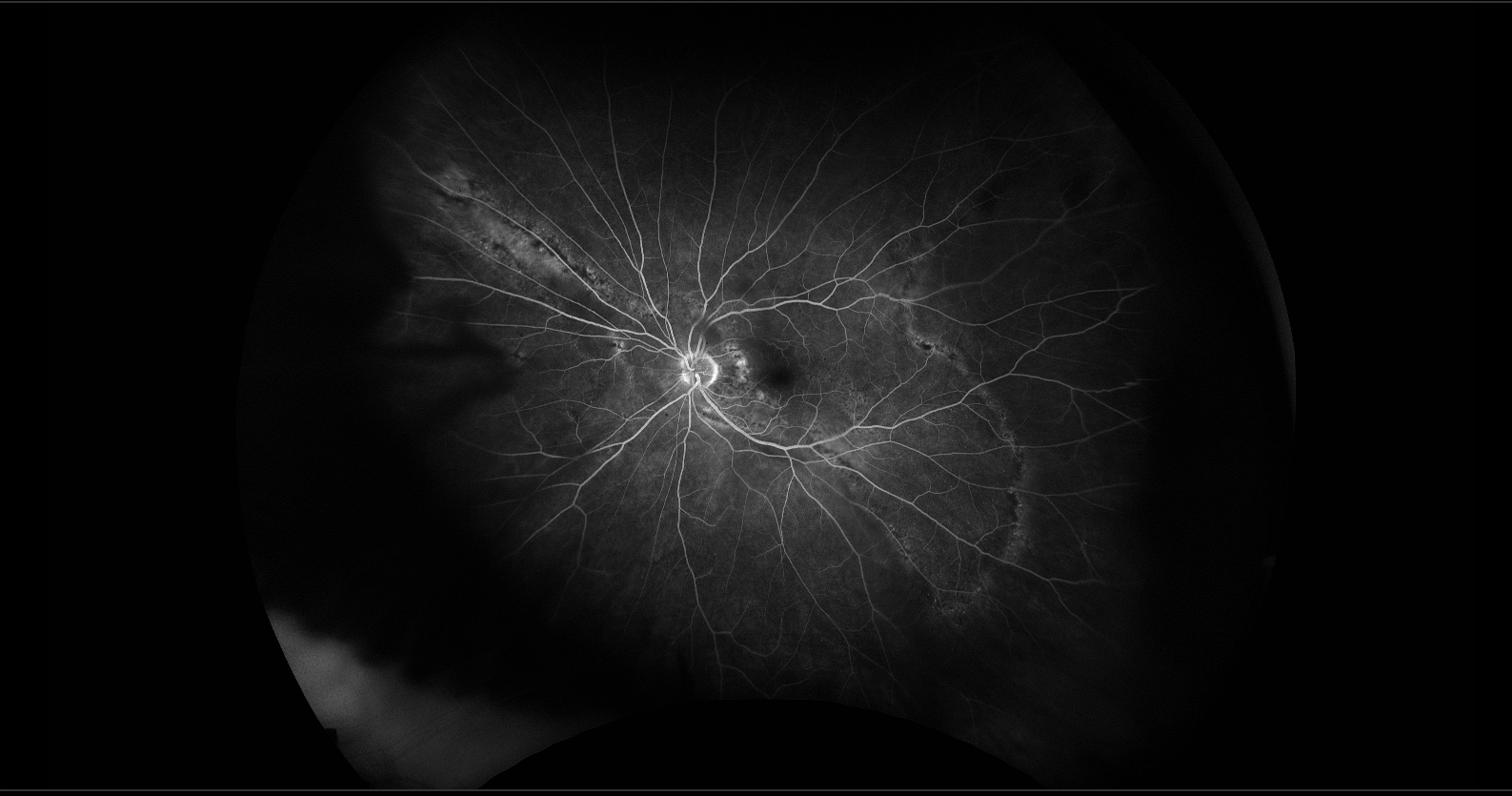
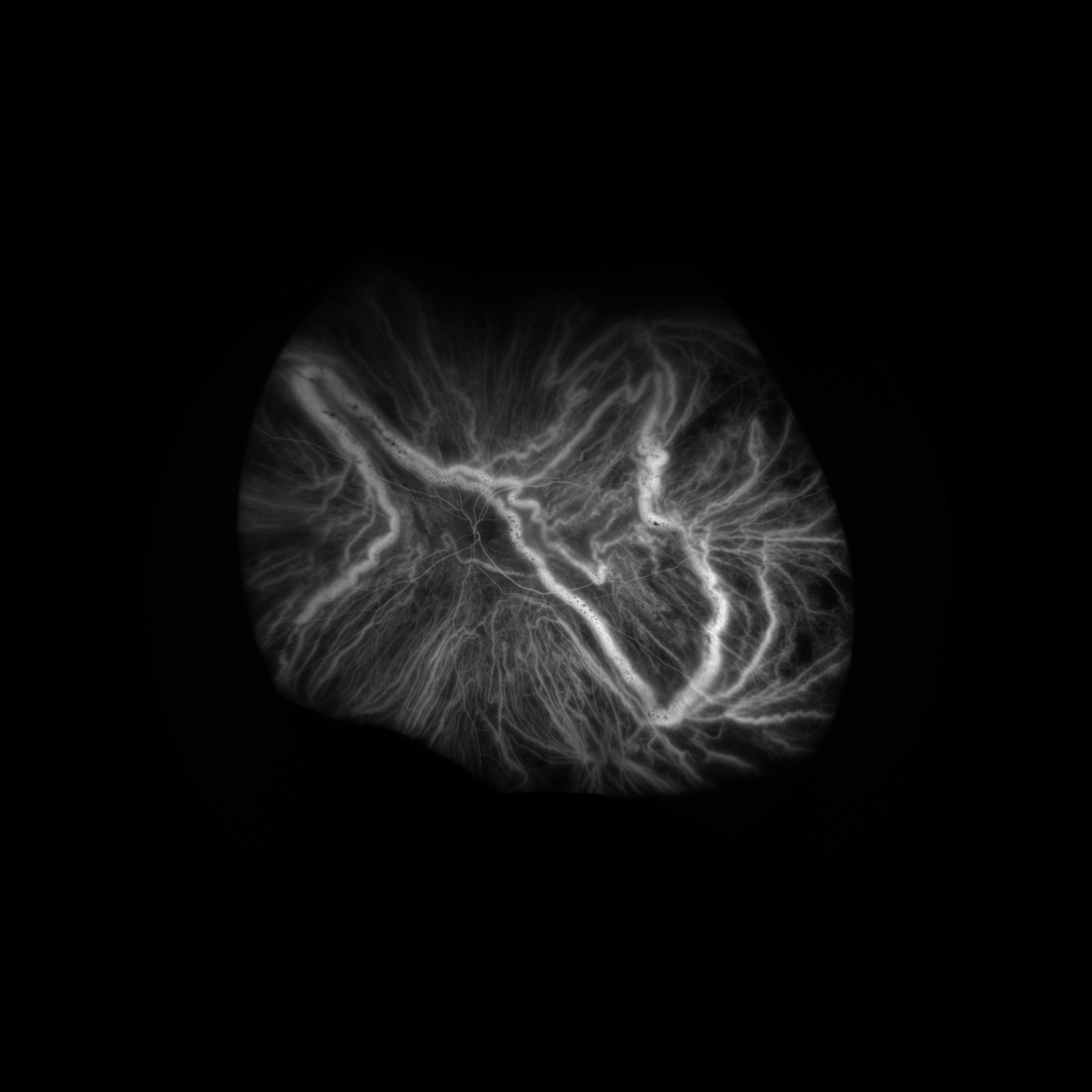
The red-free image (left of the OCT image) shows numerous hyperreflective dots both along and adjacent to the linear lesion, consistent with reflective exudative material. OCT demonstrates subretinal fluid with elongated photoreceptors, suggesting chronicity, as well as elevation of the retina and RPE by the choroidal macrovessel, disruption of the overlying choriocapillaris, and choroidal lucency corresponding to the vessel. Fluorescein angiography shows normal filling times and hyperfluorescence of the temporal loop and a linear lesion superonasal to the disc without late leakage. Indocyanine green angiography reveals hyperfluorescence corresponding to the irregular lesions that also exhibit hyperautofluorescence.

A choroidal macrovessel is a rare, abnormally dilated choroidal blood vessel. It is usually asymptomatic and is most often identified incidentally during routine fundus examination in middle or late adulthood. Although its etiology is unknown, it is generally considered a congenital developmental anomaly. In some cases, retinal elevation and subretinal fluid may produce metamorphopsia or decreased vision. Indocyanine green angiography is particularly helpful in establishing the diagnosis, as demonstrated in this case. No proven treatment exists for symptomatic patients, although anti-VEGF therapy has been attempted.

References

Gallo B, de Silva SR, Mahroo OA, et al. Choroidal macrovessels: multimodal imaging findings and review of the literature. Br J Ophthalmol. 2022;106(5):568-575.

Pichi F, Morara M, Veronese C, et al. Multimodal Imaging in Choroidal Macroaneurysms. Retina. 2013;33(7):1568-1577.

Mopuru R, Liu TYA, Arevalo JF. Choroidal Macrovessel Diagnosed on Multimodal Imaging, including Swept-Source Optical Coherence Tomography Angiography. Case Rep Ophthalmol. 2022;13(2):215-219.

Case Photos

Click the Images below to enlarge
Photo OD
Photo OS
Autofluorescence OS
OCT OS
FA OS 38 sec
FA OS 52 sec
FA OS 2 min 15 sec
ICG OS

Answer

Choroidal macrovessel

Imaging studies of the right eye are unremarkable. The fundus photograph of the left eye demonstrates a large, irregular, temporal linear loop of hypopigmentation with focal areas of hyperpigmentation. Fundus autofluorescence reveals linear and punctate hyperautofluorescence along portions of the loop, as well as two subtle linear hyperautofluorescent lesions nasal to the disc, indicating retinal pigment epithelium (RPE) stress.

The red-free image (left of the OCT image) shows numerous hyperreflective dots both along and adjacent to the linear lesion, consistent with reflective exudative material. OCT demonstrates subretinal fluid with elongated photoreceptors, suggesting chronicity, as well as elevation of the retina and RPE by the choroidal macrovessel, disruption of the overlying choriocapillaris, and choroidal lucency corresponding to the vessel. Fluorescein angiography shows normal filling times and hyperfluorescence of the temporal loop and a linear lesion superonasal to the disc without late leakage. Indocyanine green angiography reveals hyperfluorescence corresponding to the irregular lesions that also exhibit hyperautofluorescence.

A choroidal macrovessel is a rare, abnormally dilated choroidal blood vessel. It is usually asymptomatic and is most often identified incidentally during routine fundus examination in middle or late adulthood. Although its etiology is unknown, it is generally considered a congenital developmental anomaly. In some cases, retinal elevation and subretinal fluid may produce metamorphopsia or decreased vision. Indocyanine green angiography is particularly helpful in establishing the diagnosis, as demonstrated in this case. No proven treatment exists for symptomatic patients, although anti-VEGF therapy has been attempted.

References

Gallo B, de Silva SR, Mahroo OA, et al. Choroidal macrovessels: multimodal imaging findings and review of the literature. Br J Ophthalmol. 2022;106(5):568-575.

Pichi F, Morara M, Veronese C, et al. Multimodal Imaging in Choroidal Macroaneurysms. Retina. 2013;33(7):1568-1577.

Mopuru R, Liu TYA, Arevalo JF. Choroidal Macrovessel Diagnosed on Multimodal Imaging, including Swept-Source Optical Coherence Tomography Angiography. Case Rep Ophthalmol. 2022;13(2):215-219.

Genetics & AREDS Essay
Return to News & Events