Case Of The Month | July 2026

Case of the Month
July 30, 2026

The Case

The Case

A 67-year-old woman presented with several weeks of decreased vision in her left eye. Her medical history was significant for breast cancer that had been treated seven years earlier, with no known metastatic disease. Her past ocular history was unremarkable.

Visual acuity was 20/40 OD and count fingers at 3 feet OS. Examination revealed early cataracts in both eyes. Fundus examination demonstrated a large, nonpigmented superotemporal choroidal mass with associated subretinal fluid in the right eye. In the left eye, three nonpigmented choroidal lesions were present, with subretinal fluid extending into the central macula.

Given her history of breast cancer, the presumptive diagnosis was choroidal metastases. What treatment is indicated?

Answer

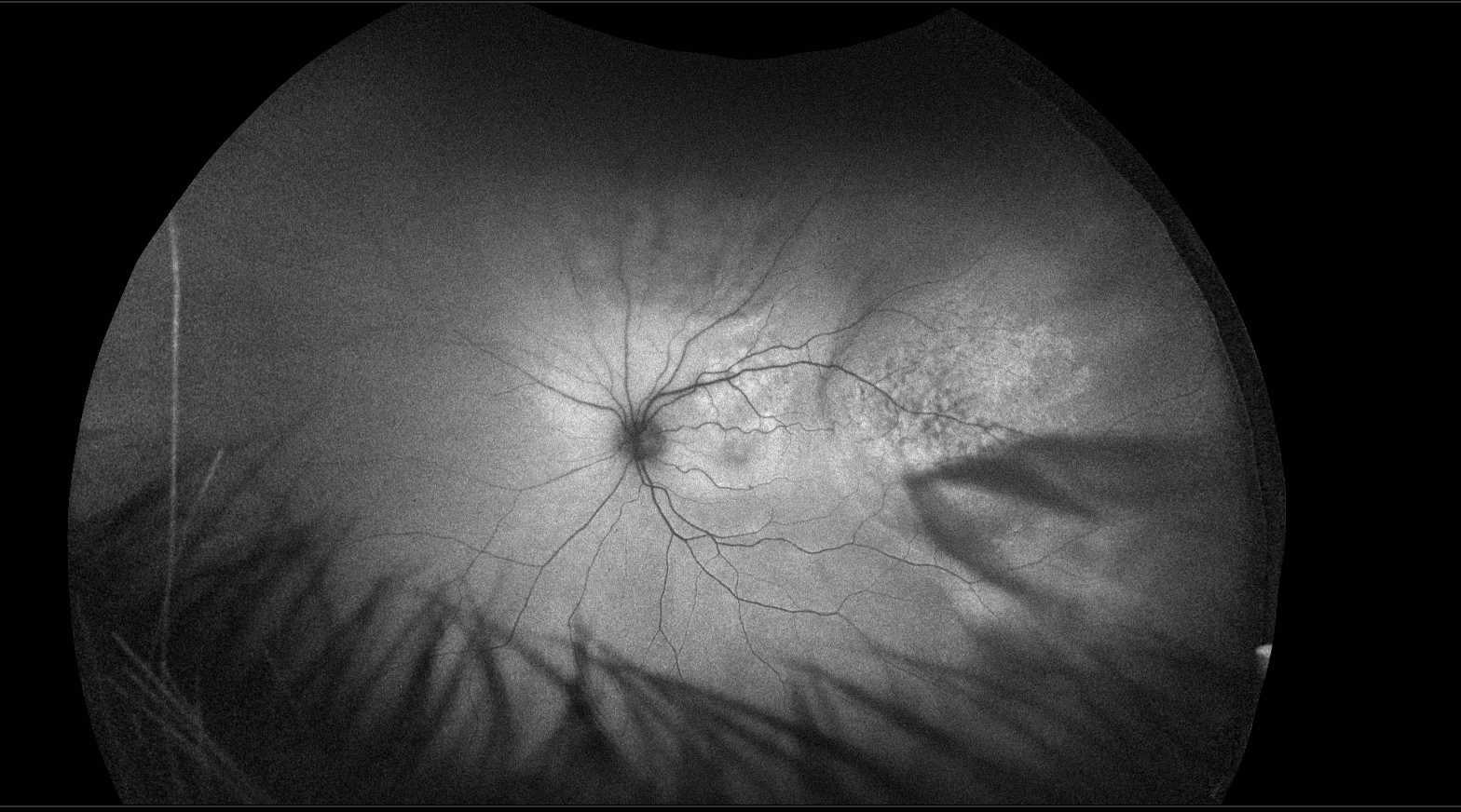
The fundus photographs reveal the metastatic lesions. The autofluorescence images show mottled autofluorescence of the lesions and hyperautofluorescence associated with the subretinal fluid, which extends into the macula in the left eye.

The patient was treated with ribociclib (Kisqali), aCDK4/6 inhibitor used to treat hormone receptor (HR)-positive, HER2-negative breast cancer. Ribociclib inhibits cyclin-dependent kinases 4 and 6, proteins that promote cell division, and is administered in combination with hormonal therapy. Our patient also received anastrozole (Arimidex).

The response was dramatic, with marked regression of the choroidal tumors in both eyes. One year later, the visual acuity in the left eye had improved to 20/60.

Before the advent of modern targeted and immunologic therapies, the prognosis for patients with metastatic cancer to the eye was generally poor, with most surviving less than one year. Carcinoid tumors were a notable exception. As a result, ocular metastases were typically managed with external beam radiation therapy, a palliative treatment that often preserved useful vision for the remainder of the patient's life.

Today, many patients with metastatic breast cancer who are candidates for targeted systemic therapies have substantially better outcomes. These treatments frequently produce regression of choroidal metastases while simultaneously controlling systemic disease, reducing or eliminating the need for ocular radiation in many cases.

Case Photos

Click the Images below to enlarge

Answer

The fundus photographs reveal the metastatic lesions. The autofluorescence images show mottled autofluorescence of the lesions and hyperautofluorescence associated with the subretinal fluid, which extends into the macula in the left eye.

The patient was treated with ribociclib (Kisqali), aCDK4/6 inhibitor used to treat hormone receptor (HR)-positive, HER2-negative breast cancer. Ribociclib inhibits cyclin-dependent kinases 4 and 6, proteins that promote cell division, and is administered in combination with hormonal therapy. Our patient also received anastrozole (Arimidex).

The response was dramatic, with marked regression of the choroidal tumors in both eyes. One year later, the visual acuity in the left eye had improved to 20/60.

Before the advent of modern targeted and immunologic therapies, the prognosis for patients with metastatic cancer to the eye was generally poor, with most surviving less than one year. Carcinoid tumors were a notable exception. As a result, ocular metastases were typically managed with external beam radiation therapy, a palliative treatment that often preserved useful vision for the remainder of the patient's life.

Today, many patients with metastatic breast cancer who are candidates for targeted systemic therapies have substantially better outcomes. These treatments frequently produce regression of choroidal metastases while simultaneously controlling systemic disease, reducing or eliminating the need for ocular radiation in many cases.

Genetics & AREDS Essay
Return to News & Events